

















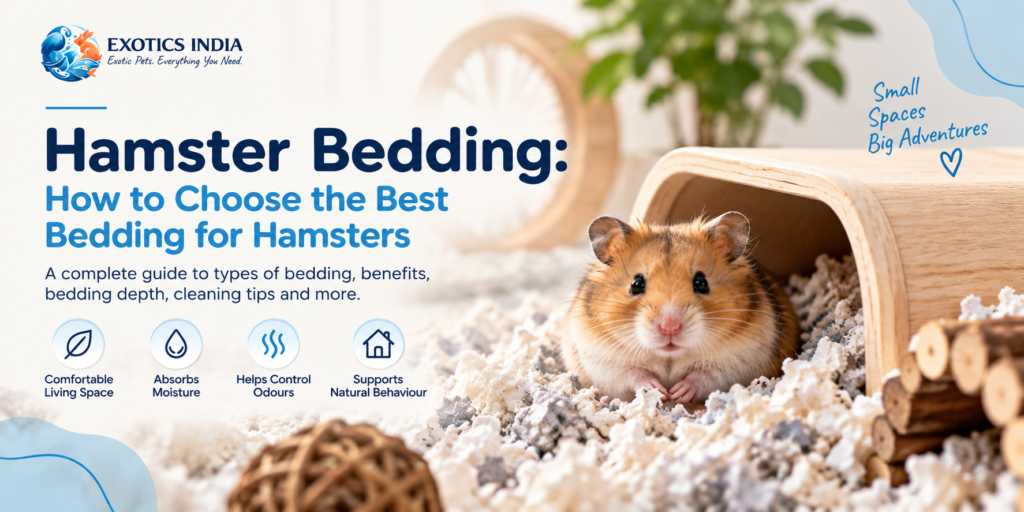
Choosing the right hamster bedding is one of the most important parts of creating a comfortable and enriching home for your hamster. Bedding isn’t simply something that covers the bottom of the enclosure. Hamsters naturally dig, burrow, hide, nest and store food, so their bedding becomes an important part of their everyday environment.
Good bedding for hamsters should provide a comfortable surface, absorb moisture, help control odours and give your hamster enough material to express natural behaviours such as digging and burrowing.
But what is the best hamster bedding? Is paper bedding suitable? How deep should hamster bedding be? And how often should you change it?
This guide covers everything you need to know about choosing bedding for hamsters, including paper bedding, bedding depth, cleaning, safety and Kaytee hamster bedding options.
Why Is Hamster Bedding Important?
Hamsters are natural burrowers. They instinctively dig, create nesting spaces and seek sheltered areas where they can rest and store food.
This means the right bedding for hamsters does considerably more than simply cover the enclosure floor.
Good hamster bedding can:
- Provide material for digging and burrowing
- Create a soft and comfortable sleeping area
- Give hamsters material for building nests
- Absorb urine and moisture
- Help control unpleasant odours
- Provide cushioning underfoot
- Make spot-cleaning easier
- Encourage natural hamster behaviour
The objective is therefore to provide enough appropriate bedding for your hamster to interact with rather than using it only as a thin decorative layer.
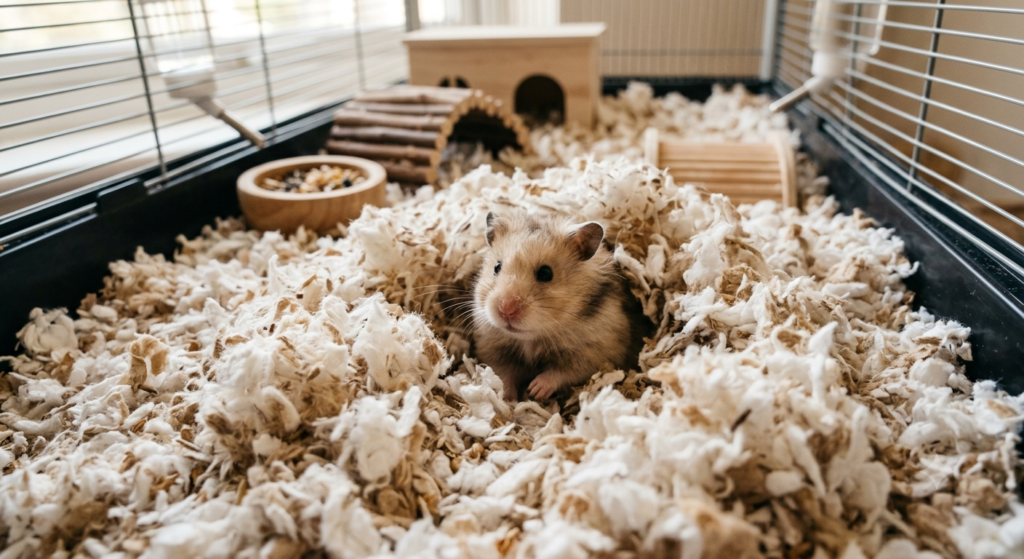
What Is the Best Bedding for Hamsters?
The best hamster bedding should provide a balance of comfort, absorbency, cleanliness and support for natural behaviours.
Look for bedding that is soft, absorbent, relatively low in dust and specifically suitable for hamsters or other appropriate small pets.
Burrowing is another important consideration. Your hamster should be able to dig into the bedding, move it around and use it to create nesting areas.
Is Paper Bedding for Hamsters a Good Choice?
Hamster paper bedding is one of the popular choices for small-pet habitats.
Purpose-made paper bedding for hamsters consists of processed paper fibres designed for use as animal bedding. Depending on the particular product, it can provide softness, moisture absorption and odour control while remaining lightweight enough for hamsters to move around.
Its texture also makes paper bedding useful for nesting and creating deeper bedding areas.
When choosing paper bedding, use a product specifically intended for small animals rather than assuming ordinary shredded household paper provides the same characteristics.
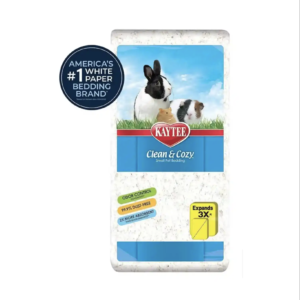
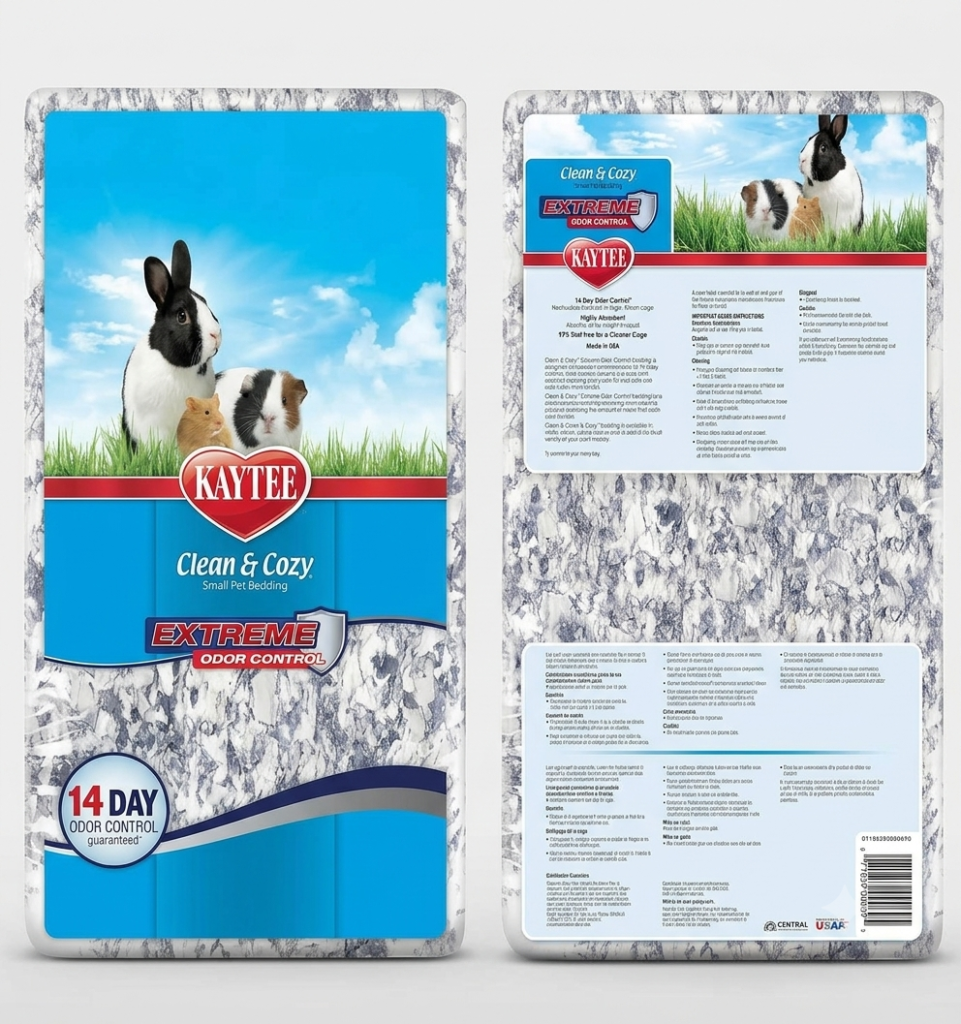
For pet parents looking for Kaytee hamster bedding, one option available from Exotics India is Kaytee Clean & Cozy Extreme Odor 40L.
https://exoticsindia.com/product/kaytee-clean-and-cozy-white-24-6l/
How Deep Should Hamster Bedding Be?
Hamsters don’t just enjoy digging , burrowing is an important natural behaviour. In the wild, hamsters construct underground systems that can contain sleeping areas, food-storage chambers and separate areas for other activities. Providing enough hamster bedding allows a pet hamster to express some of these same behaviours inside its enclosure.
A very shallow layer of bedding may absorb moisture, but it doesn’t provide enough material for meaningful digging or tunnel building.
How much bedding depth should you provide?
As a practical target, many hamster-care guidelines recommend providing a deep bedding area of around 20 cm (8 inches) or more where the enclosure allows it. Larger species, particularly Syrian hamsters, can benefit from even deeper areas because their bodies require more space to move through a burrow. Rather than treating this as an exact measurement that every enclosure must follow, the important question is whether your hamster has enough bedding to actually disappear beneath the surface and construct a usable burrow. If the enclosure cannot accommodate deep bedding everywhere, create a dedicated deep-bedding section rather than keeping the entire enclosure uniformly shallow.
Can the bedding actually hold a tunnel?
Depth isn’t the only consideration. Good bedding for hamsters should have enough structure to support the tunnels your hamster creates. If the bedding immediately collapses every time the hamster digs through it, having a large quantity of it becomes less useful for burrowing. Paper-based hamster bedding can work well for this purpose, particularly when it is gently compressed rather than left extremely loose and fluffy. Some owners also use suitable hay mixed through sections of paper bedding to add additional structure. Any additional material introduced into the enclosure should itself be appropriate for hamsters.
Don’t compress bedding too tightly
There is a difference between gently pressing bedding down so that it has some structure and packing it into a solid mass. Your hamster should still be able to dig through the bedding and rearrange it. The objective is to provide a substrate that can support a burrow while remaining easy for the hamster to manipulate.
How Much Hamster Bedding Do You Need?
There isn’t a universal number of litres or kilograms of hamster bedding that every owner needs.
The amount depends primarily on:
- The floor dimensions of the enclosure
- The depth of the bedding
- Whether the entire enclosure or only one section is deep
- How much the particular bedding expands after opening
- How much is removed during regular cleaning
This is also why comparing bedding purely by package weight can be misleading.
Litres vs weight: what should you look at?
Small-animal bedding is frequently sold by volume, such as 20L, 40L or larger packs. It may also be compressed inside the package and expand considerably once removed.
For bedding, volume can therefore be particularly useful because you’re ultimately trying to fill a certain amount of enclosure space.
For example, the Kaytee Clean & Cozy product featured earlier in this guide comes in a 40L pack. That tells you its packaged bedding volume, but the amount required for your hamster will still depend on the dimensions and bedding depth of your particular enclosure.
You don’t necessarily need the same depth everywhere
One practical approach is to create different zones.
You might have a particularly deep area of hamster bedding for burrowing while keeping areas around certain accessories more manageable. This can also help prevent wheels, bowls and other enclosure items from becoming unstable.
Heavy accessories and hides should be positioned securely rather than simply resting on top of loose, deep bedding where they could shift as the hamster tunnels underneath.
Looking for a larger pack?
If you need a substantial amount of paper bedding for a deeper setup, Kaytee Clean & Cozy Extreme Odor is available in a 40L pack at Exotics India.
How Often Should You Change Hamster Bedding?
There is no single rule such as “replace all hamster bedding every seven days” that works for every hamster and enclosure.
In fact, routinely throwing away all of the bedding can be unnecessary.
Hamsters rely heavily on scent. Their enclosure contains familiar smells that help them recognise their environment, and completely stripping the enclosure of those scents during every clean can be disruptive.
A better approach is usually to combine regular spot-cleaning with more extensive cleaning when it is actually required.
What is spot-cleaning?
Spot-cleaning means removing only bedding that has become wet, heavily soiled or contaminated instead of replacing everything.
Check the enclosure regularly for wet bedding, areas where your hamster urinates, spoiled fresh food, damp food stored inside a burrow, bedding affected by a leaking water bottle and other obvious contamination.
Remove the affected hamster bedding and replace it with fresh bedding.
Hamsters sometimes develop preferred toilet areas. Once you identify where your hamster usually urinates, maintaining that area can become considerably easier.
Should you ever replace all the bedding?
A more extensive clean will occasionally be necessary, but that doesn’t automatically mean every piece of bedding must be discarded.
If some hamster bedding is still clean and dry, retaining a portion of familiar, unsoiled bedding during a larger clean can help preserve familiar scents.
However, hygiene takes priority. Bedding that is wet, mouldy, contaminated or otherwise unhygienic should always be removed.
What makes bedding become dirty faster?
How quickly bedding for hamsters needs attention depends on several factors.
A larger enclosure with plenty of absorbent bedding may behave very differently from a smaller setup with a shallow bedding layer. Water spills, the hamster’s toilet habits, bedding absorbency and fresh food hidden inside the enclosure can all affect how quickly particular areas become dirty. This is why the condition of the enclosure is more useful than blindly following a fixed cleaning calendar.
Don’t use smell as your only cleaning signal. Odour can indicate that bedding needs attention, but don’t wait for the enclosure to smell strongly before checking it. Some hamster bedding is specifically designed to provide stronger odour control. That can make the enclosure more pleasant, but odour control doesn’t mean dirty or wet bedding can simply be left indefinitely. Regularly inspect the bedding itself for moisture and contamination.
Scented or Unscented Hamster Bedding: Which Should You Choose?
It’s easy to assume that strongly scented bedding will keep a hamster enclosure fresher, but fragrance and odour control aren’t the same thing.
A fragrance primarily masks smells. Good odour management starts with absorbent hamster bedding and appropriate cleaning.
When comparing bedding for hamsters, focus on absorbency, dust levels, softness, suitability for small animals, burrowing ability and odour-control properties rather than simply how strongly the product smells.
An unscented product doesn’t necessarily mean poor odour control. Bedding can manage moisture and odours without needing to make the enclosure smell strongly perfumed.
What Should You Avoid When Choosing Bedding for Hamsters?
Not every soft-looking material belongs inside a hamster enclosure.
Excessively dusty bedding
Hamsters spend much of their time very close to — and often underneath — their bedding. A product that releases excessive amounts of fine dust can therefore be undesirable. Look for bedding manufactured specifically for small-animal habitats and check the manufacturer’s description regarding dust.
Strongly fragranced bedding
Don’t choose bedding simply because it has the strongest perfume. Hamsters have a highly developed sense of smell, and the primary purpose of bedding should be providing an appropriate substrate rather than making the enclosure smell like a household air freshener.
Fluffy nesting materials with long fibres
Some fluffy nesting products may look exceptionally soft but contain long fibres that can become tangled around a hamster. Softness alone is therefore not enough to determine whether something is appropriate hamster bedding. Always check whether the material is specifically intended and considered suitable for hamsters.
Random household materials
Ordinary tissues, newspapers, shredded documents and other household paper aren’t automatically equivalent to commercially produced hamster paper bedding. Printing inks, coatings, adhesives, fragrances and the physical characteristics of the material can vary considerably. Purpose-made hamster bedding gives you clearer information about what the product was manufactured for.
How to Choose the Best Hamster Bedding
When you’re comparing bedding options, don’t judge them solely by price or package size.
Ask yourself:
- Is it specifically suitable for hamsters or appropriate small animals?
- Is it sufficiently soft for sleeping and nesting?
- Does it absorb moisture effectively?
- Does it produce excessive dust?
- Can the hamster dig through it?
- Can it support burrowing when used at an appropriate depth?
- How does it manage odours?
- How much usable bedding do I get from the package?
- How frequently will I need to replace soiled portions?
The best hamster bedding is ultimately the product that works well as part of the complete enclosure , not necessarily the cheapest, softest-looking or strongest-smelling option.
Frequently Asked Questions About Hamster Bedding
What is the best bedding for hamsters?
Good bedding for hamsters should be soft, absorbent, relatively low in dust and suitable for small animals. It should also allow the hamster to dig, nest and burrow. Purpose-made paper bedding is one commonly used option.
Is paper bedding good for hamsters?
Purpose-made hamster paper bedding can be a suitable choice because it can combine softness, absorbency and material that hamsters can manipulate for nesting and digging. Always check the instructions for the specific product.
How deep should hamster bedding be?
A deep bedding area of around 20 cm (8 inches) or more is a useful practical target where the enclosure permits it. The objective is to provide enough bedding for the hamster to create meaningful burrows rather than simply covering the enclosure floor.
Can hamster bedding be too deep?
Hamsters are naturally adapted to burrowing, so providing substantial bedding depth is generally intended to encourage this behaviour. The enclosure still needs to be arranged safely, particularly around heavy hides, wheels and accessories that could become unstable if a hamster tunnels underneath them.
Should I change all my hamster’s bedding every week?
Not necessarily. Regular spot-cleaning allows you to remove wet and contaminated areas without automatically discarding all of the clean hamster bedding. More extensive cleaning can be performed when the condition of the enclosure requires it.
Why does my hamster bury itself under the bedding?
Burrowing and hiding beneath bedding are natural hamster behaviours. Providing sufficient bedding allows your hamster to create sheltered spaces for sleeping, nesting and storing food.
Is Kaytee bedding suitable for hamsters?
Kaytee produces small-animal bedding products that can be used for appropriate small pets, including hamster setups where the individual product is suitable. The Kaytee Clean & Cozy Extreme Odor 40L featured earlier in this guide is a paper-based small-pet bedding. Always follow the instructions on the specific product.
Where can I buy hamster bedding in India?
Exotics India carries imported small-pet products, including Kaytee hamster bedding options. When buying hamster bedding online, check the product type, package volume and suitability for your pet rather than choosing based only on price.
Final Thoughts
Bedding makes up a significant part of a hamster’s environment. Your hamster doesn’t simply walk over it , it can dig through it, sleep underneath it, build nests with it and use it to create its own spaces within the enclosure.
That’s why choosing the right hamster bedding involves more than finding something absorbent.
Look for suitable bedding for hamsters that provides comfort, manages moisture and odours, allows natural digging and burrowing, and can be provided at an appropriate depth.
Combined with regular spot-cleaning and a thoughtfully arranged enclosure, good hamster bedding can help create a cleaner, more comfortable and more enriching home for your hamster.